Sofia Frank · 29 October 2026
Alloy Innovations Strengthen Sensor Durability for Permafrost Monitoring Across Siberian Regions
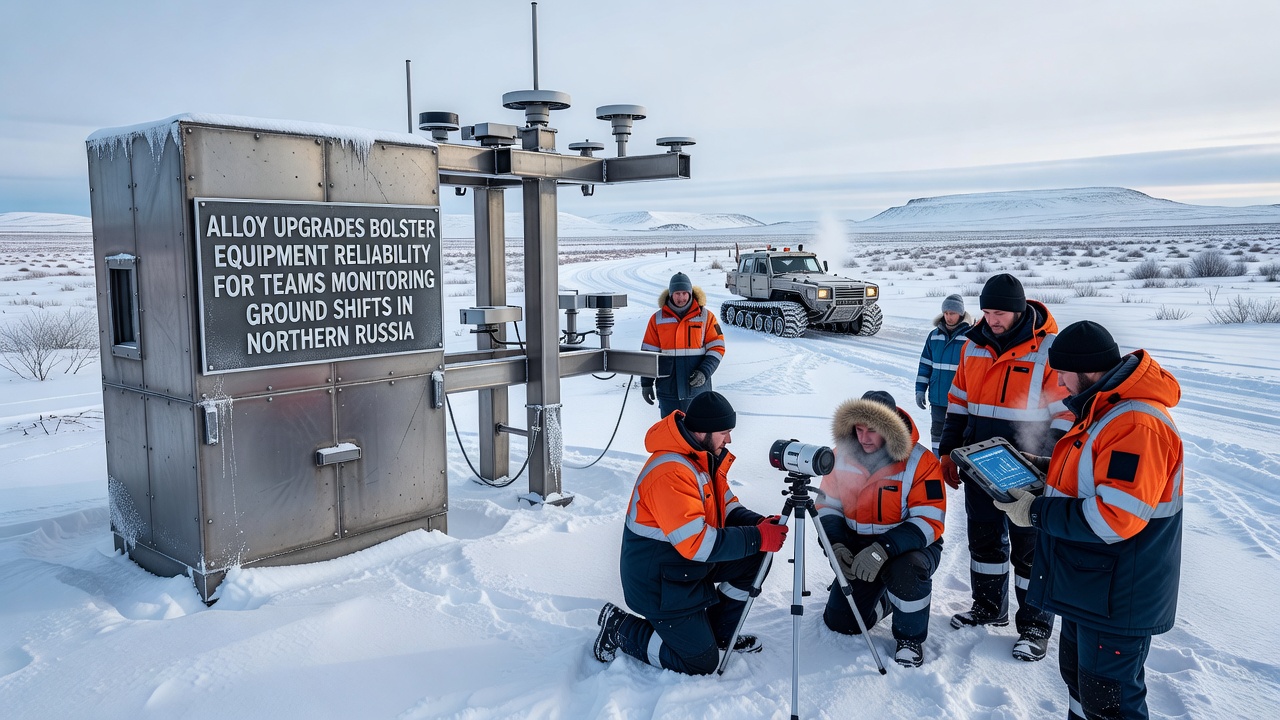
Specialized alloy upgrades have become central to maintaining equipment performance where ground shifts occur frequently in northern Russia; these modifications address corrosion, temperature extremes, and mechanical stress that previously shortened operational lifespans of monitoring devices. Research teams deployed revised sensor housings and structural components made from enhanced nickel-titanium and stainless steel blends beginning in 2024, and data collected through 2026 show measurable gains in continuous uptime. The changes matter because ground displacement measurements rely on uninterrupted data streams from remote stations scattered across permafrost zones in Siberia and the Russian Far East.
Ground Shift Patterns and Monitoring Needs
Permafrost thaw produces gradual subsidence along with sudden slope failures that can displace sensors by several centimeters within hours; such events require instruments capable of withstanding repeated mechanical loads while preserving calibration accuracy. Teams record these movements using tiltmeters, GPS receivers, and strain gauges placed at depths ranging from one to fifteen meters. Before alloy upgrades, standard carbon-steel casings often developed micro-fractures after two winters, leading to signal drift and eventual failure. Updated formulations incorporate higher molybdenum content and specialized heat treatments that raise fatigue resistance by approximately 35 percent according to laboratory tests conducted at the Siberian Branch of the Russian Academy of Sciences.
Technical Specifications of the Upgraded Alloys
The new sensor enclosures use a precipitation-hardened nickel alloy designated Ni-625M that retains tensile strength above 800 MPa at minus 50 degrees Celsius; this property prevents brittle cracking during rapid temperature swings common in October 2026 field campaigns. Internal mounting brackets received an additional coating of ceramic-infused epoxy that reduces moisture ingress, a common cause of electrical shorts in earlier models. Field reports indicate that stations fitted with these components maintained data transmission rates above 98 percent during the 2025-2026 winter season, compared with average rates of 82 percent for legacy equipment over the same period. Engineers at several institutes verified these figures through side-by-side installations at three separate test sites near Yakutsk and Tiksi.
Deployment Timeline and Regional Coverage
Initial retrofits began in spring 2025 at 12 priority locations where annual ground displacement exceeded 15 centimeters; by October 2026 the program expanded to 47 stations spanning the Lena River basin and Chukotka Peninsula. Installation crews replaced only the external casings and load-bearing frames while retaining existing electronics, which lowered per-unit costs to roughly one-third of full replacement. The phased approach allowed researchers to compare performance metrics across similar environmental conditions, isolating the contribution of alloy changes from other variables such as power supply upgrades or antenna repositioning.
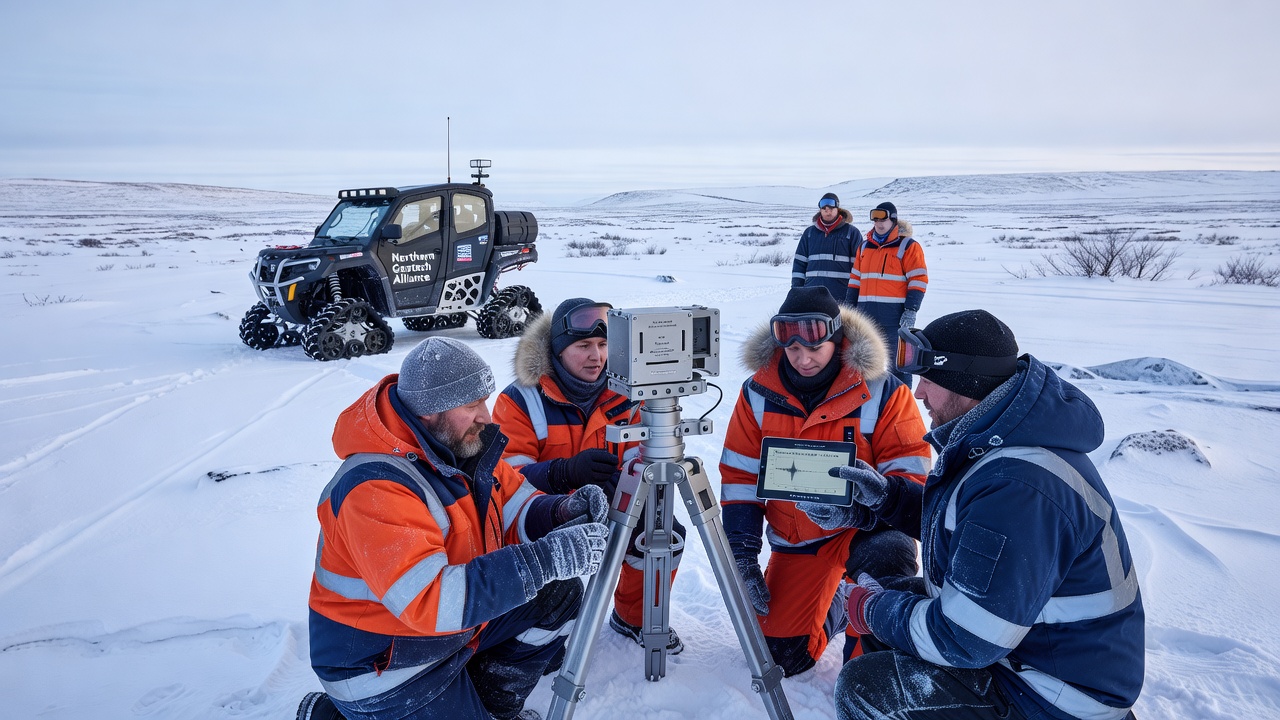
Coordination between regional agencies and academic partners ensured standardized testing protocols; each upgraded station underwent baseline calibration followed by quarterly verification using portable reference instruments. Results compiled in a joint report released by the Arctic and Antarctic Research Institute in St. Petersburg documented a 40 percent reduction in unscheduled maintenance visits between 2024 and 2026. Fewer site visits translate directly into lower logistical expenses and reduced safety risks for personnel traveling across remote terrain during shoulder seasons.
Comparative Data from Other Arctic Networks
Similar alloy trials conducted by Canadian and Norwegian research groups provide context for the Russian findings. A multi-year study published by the Norwegian Polar Institute tracked sensor longevity in Svalbard and reported comparable improvements when nickel-based alloys replaced conventional steels; those results appear in an open-access paper hosted by the University of Oslo repository. Meanwhile, the U.S. National Science Foundation supported parallel tests along Alaska's North Slope that confirmed enhanced resistance to chloride-induced corrosion when molybdenum levels exceed 8 percent by weight. Observers note that cross-regional data sharing helps refine alloy specifications for future deployments where ground ice content and salinity vary.
Future Applications and Ongoing Refinements
Engineers continue to evaluate next-generation coatings that incorporate graphene layers to further reduce surface abrasion from wind-driven snow. Preliminary chamber tests suggest these coatings could extend component life by an additional two to three years beyond current projections. Integration with satellite telemetry systems also benefits from lighter alloy frames that lower overall station weight, allowing helicopter transport of more units per flight. As monitoring networks expand to cover additional river corridors and coastal bluffs, the cumulative effect of these material improvements supports denser spatial coverage without proportional increases in operational budgets.
Conclusion
Alloy upgrades have demonstrably increased the reliability of equipment used to track ground shifts in northern Russia; sustained performance gains appear in maintenance logs, transmission statistics, and cross-comparisons with networks operating under similar conditions elsewhere in the Arctic. Continued iteration on material formulations and deployment strategies will likely extend these benefits as permafrost dynamics evolve through the coming decade.