Zoe Schwarz · 3 September 2026
Bringing Polar Climate Data Into Secondary Classrooms Worldwide
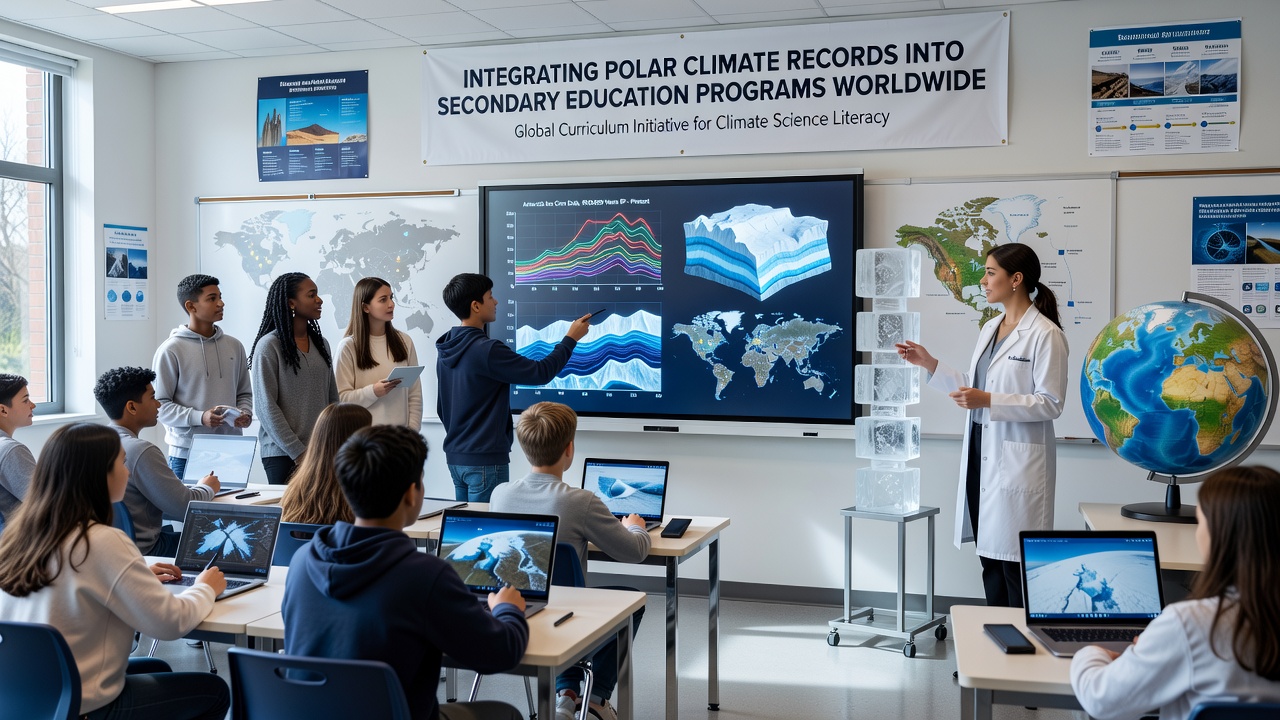
Secondary education programs around the globe continue to incorporate polar climate records as a way to connect students with long-term environmental data from ice cores, sediment layers, and satellite observations, and these efforts draw on datasets maintained by international research networks that track temperature shifts, atmospheric composition, and sea ice extent over thousands of years.
Current Approaches to Curriculum Integration
School systems in multiple countries embed polar climate records into existing science and geography courses rather than creating standalone modules, which allows teachers to align the material with national standards on climate systems and data analysis while using real measurements from sites such as Greenland and Antarctica to illustrate concepts like carbon cycle dynamics and temperature reconstruction methods.
Lesson plans often combine proxy data from ice cores with modern instrumental records so students can compare historical baselines against recent observations, and this approach appears in programs developed by organizations including the Australian Antarctic Division and the Canadian Polar Commission where educators receive training on handling large datasets and interpreting graphs that show abrupt climate events from the past.
Regional Examples and Implementation Patterns
In Europe, several secondary schools participate in projects coordinated through EU-funded networks that supply classroom kits containing simplified ice core data alongside mapping tools, and teachers report that students engage more readily when they can manipulate datasets showing methane concentrations from the last glacial period compared with current levels.
North American districts have piloted similar units that pair polar records with local environmental monitoring projects, which helps students see connections between distant ice sheet changes and regional weather patterns, while Asian and South American programs focus on translating technical papers into accessible case studies that highlight sea level implications drawn from Antarctic sediment cores.
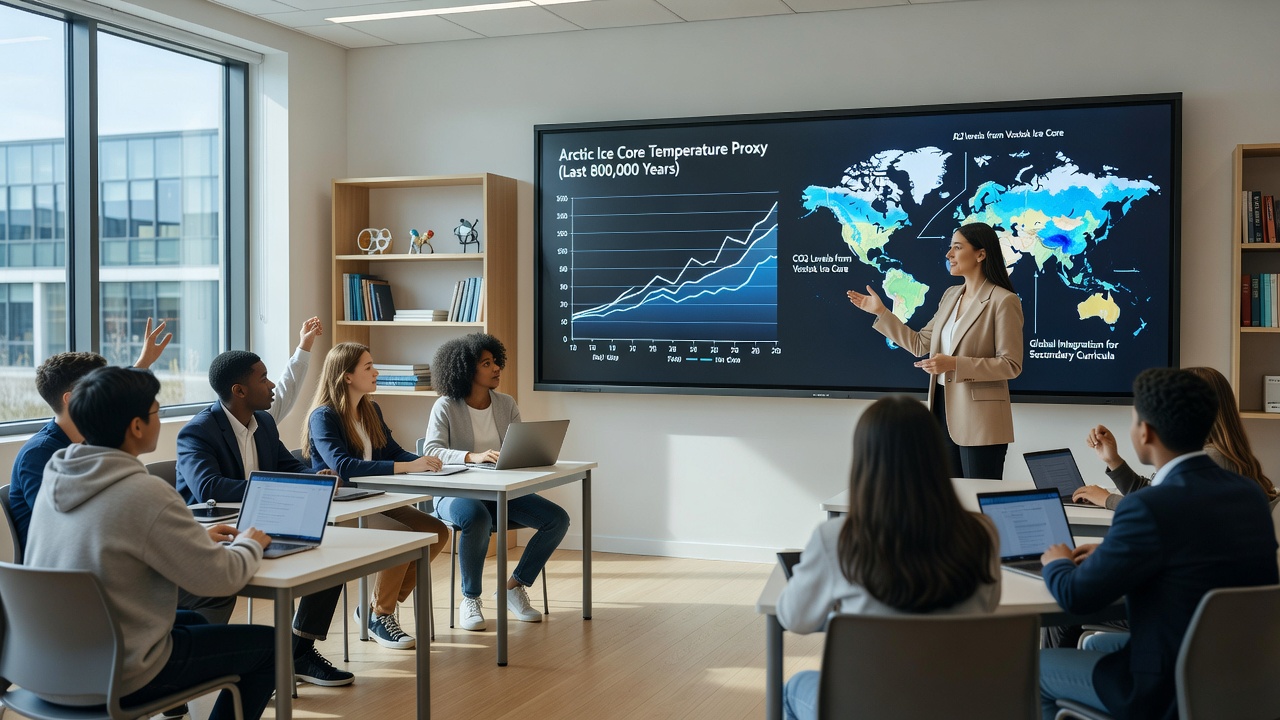
Digital platforms play a growing role because they allow schools without access to physical samples to explore the same records through interactive visualizations and downloadable spreadsheets, and these tools frequently update when new findings emerge from ongoing drilling campaigns in both polar regions.
Challenges and Resource Considerations
Resource disparities remain evident because not every school district can provide the computing power or teacher preparation time needed for complex data exercises, yet partnerships with research institutions help bridge some gaps by offering free webinars and pre-processed datasets that reduce preparation demands on classroom instructors.
Language barriers and curriculum overcrowding also surface in reports from international education surveys, which show that polar topics compete with other pressing subjects for instructional hours, although cross-curricular links with history and mathematics classes create additional entry points for the material without requiring extra time slots.
Developments Anticipated for September 2026
Plans announced by several polar research consortia point toward expanded data releases scheduled for September 2026 that will include higher-resolution records from newly analyzed cores, and education working groups intend to release accompanying teaching modules timed with those releases so secondary programs can incorporate the freshest measurements into lessons on climate variability.
These coordinated releases build on earlier collaborative efforts between national agencies and aim to standardize core datasets across participating countries, which could simplify lesson adaptation for teachers working in different educational systems while maintaining scientific accuracy through peer-reviewed source material.
Conclusion
Integration of polar climate records into secondary education continues to expand through curriculum alignment, digital tools, and institutional partnerships that supply authentic data to classrooms across continents, and the scheduled 2026 data releases represent one more step in making these long-term environmental measurements available for student analysis and interpretation in standard school settings.