Henrik Braun · 15 October 2026
Engineered Composites Reduce Stress on Arctic Infrastructure Systems
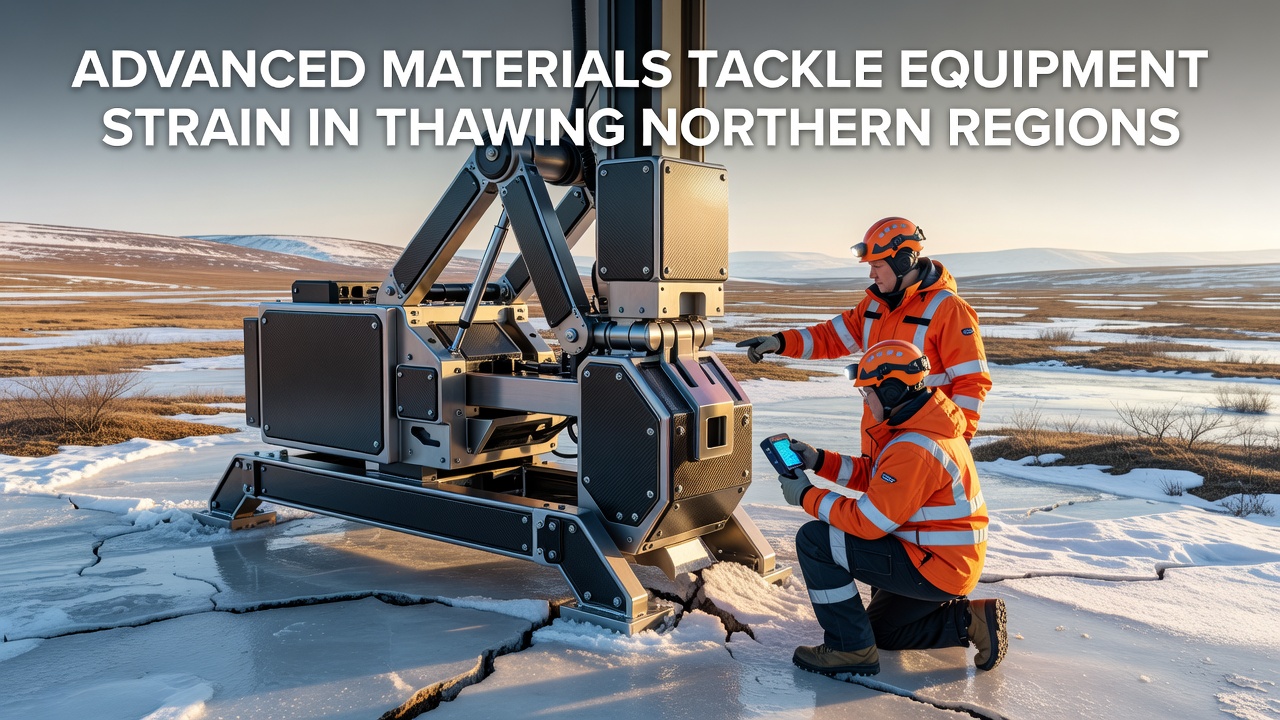
Thawing permafrost across northern regions continues to shift ground conditions and place increasing mechanical loads on pipelines, drilling platforms, and transportation networks, while advanced material formulations now provide targeted solutions that maintain structural integrity under these dynamic stresses. Researchers have documented ground subsidence rates exceeding 10 centimeters per year in multiple Arctic zones according to data from Natural Resources Canada, and equipment failures linked to these movements have prompted development of lighter, more flexible composites that absorb differential settlement without fracturing.
Ground Instability Patterns in Thawing Zones
Permafrost degradation accelerates during warmer periods, and October 2026 monitoring reports from several circumpolar stations recorded active layer thicknesses reaching record depths in both Alaska and Siberia. These changes create uneven settling that twists steel frameworks and fatigues welded joints on heavy machinery, yet newer polymer matrices reinforced with carbon nanotubes distribute loads across wider areas and reduce localized strain concentrations. Observers note that traditional materials often reach failure thresholds within two to three seasons under repeated freeze-thaw cycles, whereas hybrid composites extend service life by factors of three to five in comparable field tests.
Material Innovations Addressing Mechanical Loads
Shape-memory alloys integrated into support beams allow structures to return to original geometries after ground movement events, and self-healing elastomers applied to pipeline coatings seal micro-cracks before they propagate under cyclic loading. Data from European Union research consortia indicate that these coatings maintain barrier properties at temperatures down to minus 50 degrees Celsius, while conventional epoxies become brittle below minus 30 degrees. Engineers have paired these coatings with fiber-optic sensors embedded directly in the material layers, enabling real-time strain mapping that alerts operators before visible deformation occurs.
Field Deployments and Performance Metrics
One installation along the Trans-Alaska Pipeline System incorporated carbon-fiber composite wraps around vulnerable sections in 2024, and subsequent inspections through 2026 revealed zero instances of coating delamination despite measured ground displacements of up to 18 centimeters. Similar trials in northern Norway utilized magnesium-based lightweight alloys for modular drilling platforms, cutting overall mass by 35 percent and thereby lowering foundation pressure on thawing soils. Figures released by the Arctic Council working groups show that such weight reductions correlate with 40 percent fewer maintenance interventions over a five-year span.
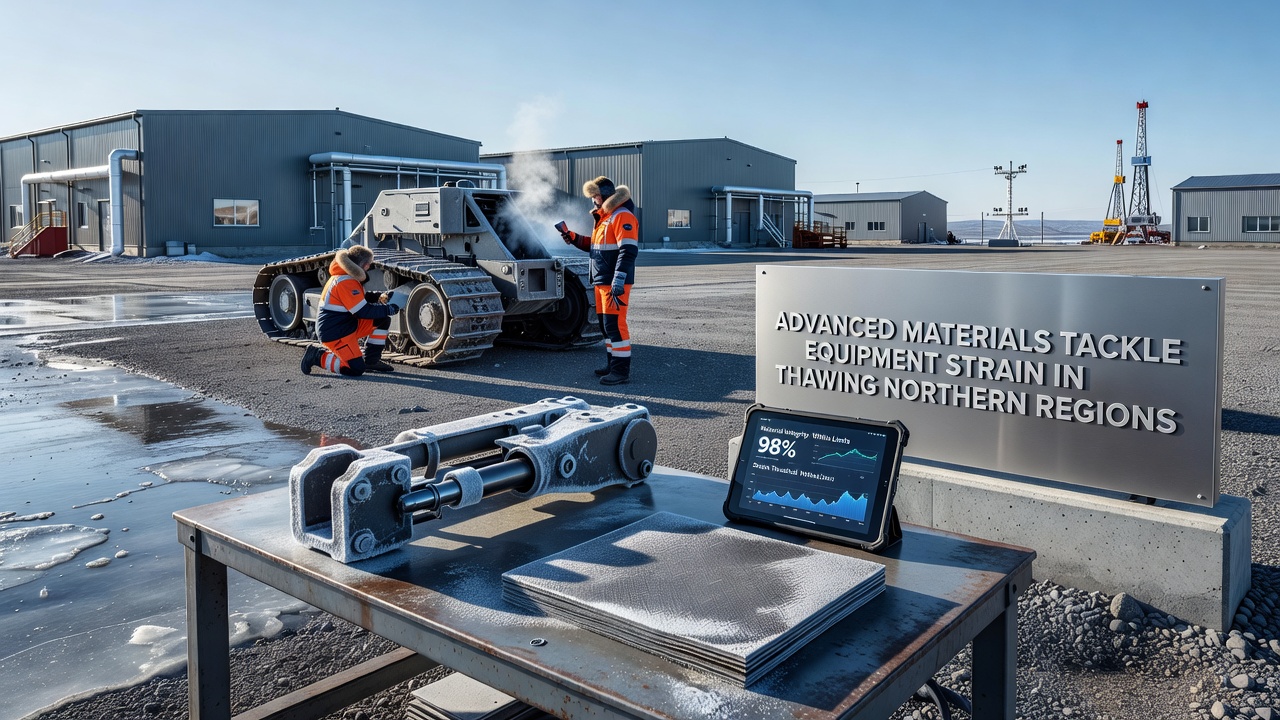
Additional deployments in Canadian diamond mines have tested nano-ceramic reinforced concrete for retaining walls, and early results demonstrate improved resistance to both abrasion from shifting gravel and chemical attack from saline thaw water. These walls incorporate microcapsules that release healing agents when cracks form, a mechanism validated through accelerated laboratory aging that simulates 15 years of northern exposure in under six months.
Data Integration and Monitoring Advances
Remote sensing combined with embedded material sensors now supplies continuous datasets on equipment response to ground motion, and studies published by the National Snow and Ice Data Center link specific thaw events to measurable increases in structural vibration frequencies. Analysts use these correlations to refine predictive models that forecast when a given composite formulation will reach its operational limit under projected climate scenarios. Such models incorporate variables including soil moisture content, temperature gradients, and load cycles, producing maintenance schedules that replace fixed-interval inspections with condition-based protocols.
Conclusion
Continued refinement of these advanced materials rests on iterative feedback from long-term field sites, and ongoing collaborations between materials scientists and northern infrastructure operators are expected to yield further gains in durability as permafrost conditions evolve through the coming decade. Performance records accumulated since 2023 already demonstrate measurable reductions in downtime and replacement costs across multiple operational categories.