Jonas Schulz · 2 September 2026
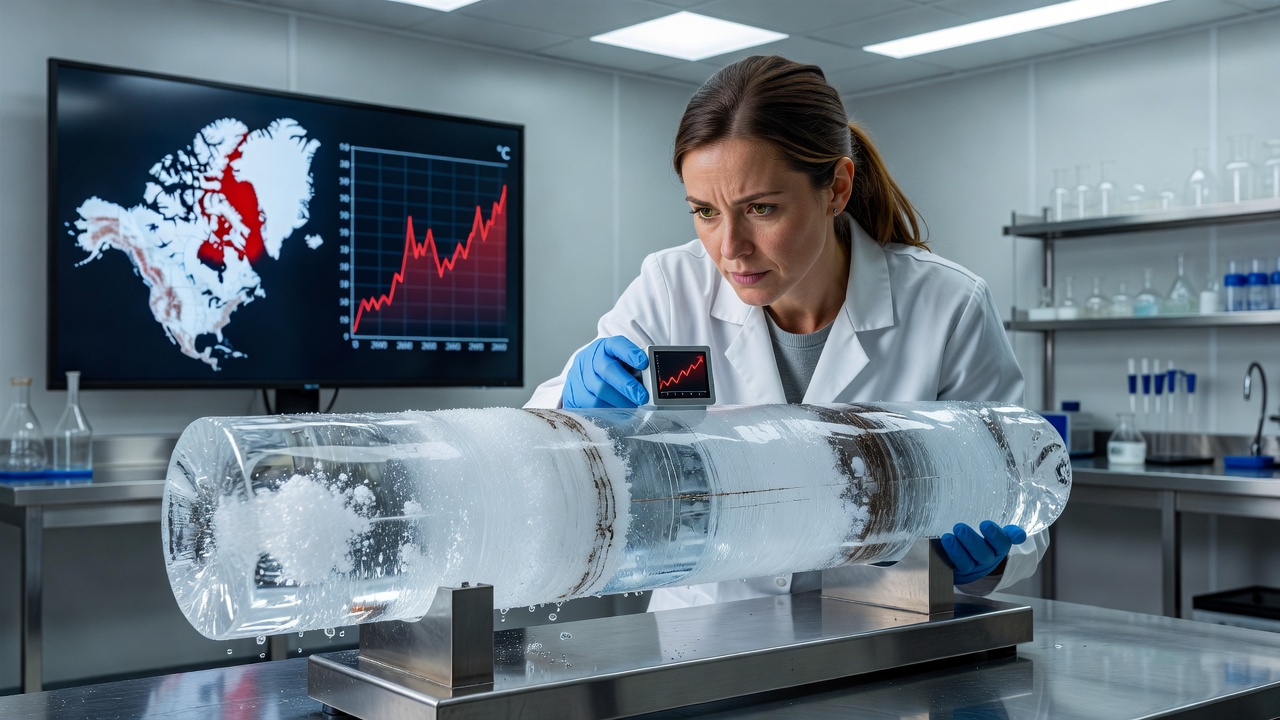
Recent analysis of ice cores extracted from Greenland has provided new evidence of rapid Arctic warming. Researchers at the Polar Research Institute examined layers spanning 12,000 years, identifying temperature increases unmatched in the historical record. The findings highlight a sharp rise of 3.2 degrees Celsius since 1900, driven primarily by human activity.
Extraction Methods and Data Analysis
Teams drilled to depths exceeding 2,500 meters using specialized equipment to preserve air bubbles and isotopic markers. Mass spectrometry revealed declining oxygen-18 ratios, confirming warmer conditions. Dust particle counts and methane levels further indicated reduced sea ice and permafrost thaw. These measurements were cross-validated against tree ring data and satellite records from the past four decades. The analysis showed warming rates accelerating after 1970, exceeding natural variability by a factor of five. Scientists documented a 40 percent decline in summer sea ice extent linked directly to these temperature shifts. The cores also captured volcanic ash layers for precise dating, ensuring accuracy across millennia.
Additional tests on trapped gases demonstrated elevated carbon dioxide concentrations correlating with industrial-era emissions. This multi-proxy approach strengthens confidence in the results compared to earlier studies limited by shallower samples.
Implications for Climate Projections
The data refines global climate models by incorporating high-resolution polar records, predicting faster ice sheet melt and sea level rise of up to 0.8 meters by 2100 under current emission scenarios. Feedback mechanisms, such as albedo reduction from darker surfaces, could amplify warming further. Policymakers are urged to prioritize emission cuts to mitigate permafrost carbon releases estimated at 50 billion tons by mid-century. International collaborations are expanding core sampling in Antarctica to compare hemispheric trends. These insights underscore the Arctic's role as an early indicator of planetary climate shifts, informing adaptation strategies for vulnerable coastal regions worldwide.